
The new reality in the IT market
Higher prices are not a short-term anomaly. Those waiting for prices to fall may be waiting until 2028. In recent months, we have had numerous conversations with manufacturers such as Lenovo, HP, Hewlett Packard Enterprise, Microsoft, Dell Technologies, Intel, and AMD. One of the most frequent questions is: When will prices for memory, chips, and servers return to normal?
Our assessment is now quite clear:
The massive price increases of recent months are not solely a consequence of geopolitical uncertainties, short-term surges in AI demand, or isolated supply bottlenecks. The driving force is the exploding global demand for storage and chip capacity.
AI providers are investing in data centers on an unprecedented scale. At the same time, demand continues to rise in many other industries. Whether for autonomous driving or industrial automation, virtually every sector now requires more computing power, more storage, and more semiconductors.
Manufacturers are naturally responding. New factories and production facilities are being built worldwide. However, the construction of modern chip and memory plants takes two to three years.
We currently assume that the strained supply situation and the increased price level could persist at least until the end of 2027.
What does this mean for small and medium-sized enterprises (SMEs)?
From our perspective, waiting is not an option. The crucial question is no longer: "When will the systems become cheaper again?"„
Rather: "How do we use new technologies in such a way that the investment still pays off?"„
This is precisely where the great opportunity lies for the IT channel and system houses.
The efficiency gains from automation, modern infrastructure, and AI applications often outweigh the additional hardware costs. At the same time, many medium-sized companies have significant ground to make up in digitalization, automation, and AI.
This significantly changes our role. In the future, it will no longer be just about replacing servers or providing infrastructure. It will be about guiding companies through technological change, from data protection and security to digital sovereignty and concrete AI use cases.
AI shouldn't stop at chatbots for faster Google searches. The real added value lies in automating processes, supporting decisions, and sustainably increasing productivity. This requires technology.
Above all, what's needed is advice, expertise, and trust. This is precisely where the great opportunity lies for our SYNAXON partners and the German IT channel.
In the future, it won't be the hardware that makes the difference. It will be the ability to successfully guide medium-sized businesses through this transformation.
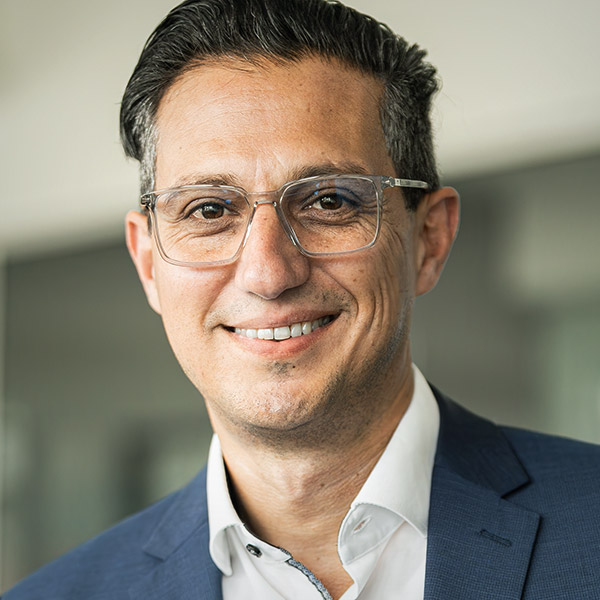
author
Miguel Rodriguez
SYNAXON Board of Directors
Follow us on social media


